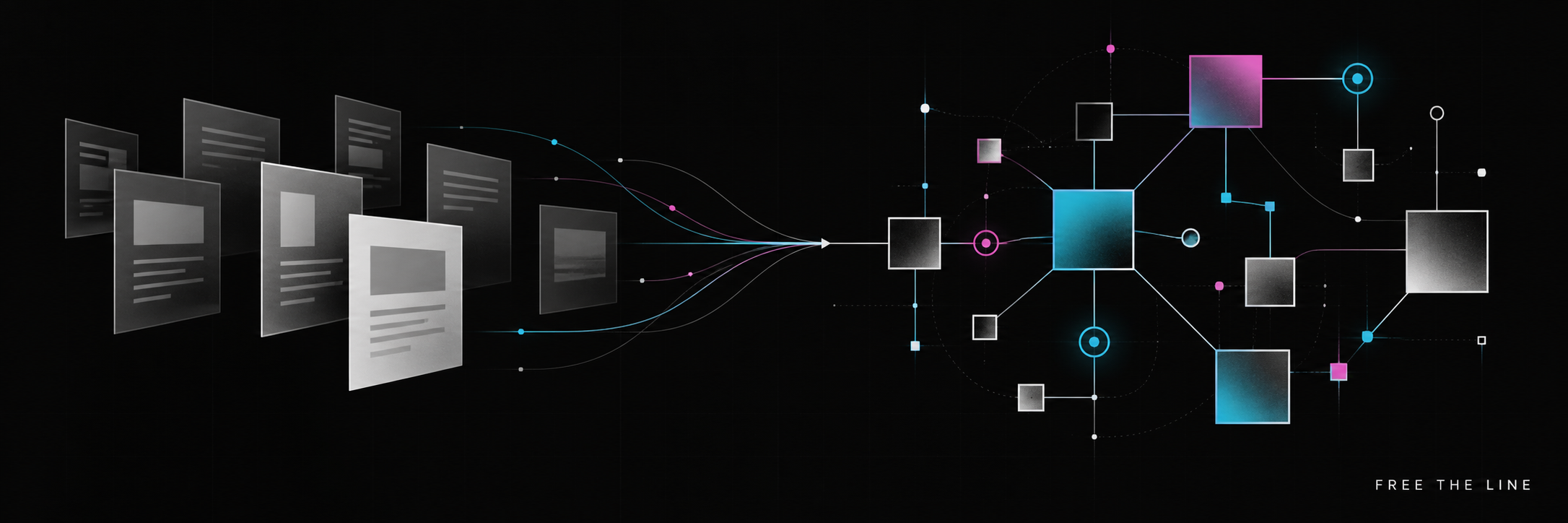
Websites were once considered the destination for online visitors. Organizations would create a handful of web pages, list their contact information, post occasional updates about their products/services, and update their website’s appearance every couple of years.
However, this model no longer represents the capabilities of a modern digital presence. Today’s organizations post content throughout multiple channels including websites, social media platforms, e-commerce stores, streaming services, press releases, newsletters, search engines and AI-based discovery platforms.
In addition to managing images, audio, video, product data, personnel data, event data, permission data, relationship data and ever-changing descriptions, today’s organizations also have to track and manage all of those elements across multiple channels.
While the website remains a critical component of an organization’s digital presence, it is now merely one destination within a much larger digital ecosystem. Free the Line builds on Bear Gallagher-Cole’s experience designing and supporting websites for over two decades. It evolved into developing connections between the various systems that support a digital presence.
WordPress Opened Up the Web to More Users
WordPress revolutionized how organizations developed and managed their websites. Organizations that relied upon web developers for every change made to their website could now develop pages, write articles, upload media and develop new features through themes and plugins.
Additionally, WordPress demonstrated another key concept: providing users with an interface to manage their content does not automatically create a coherent content management system. As websites grow in size and complexity, information becomes embedded within individual pages, custom fields, plugins, theme options, widgets, media libraries and duplicated records.
Although the website may function properly, locating specific information becomes increasingly challenging.
A Website Can Quietly Become a Collection of Workarounds
Many complicated websites were developed using a series of logical steps. A plugin was installed to address a specific issue. A page builder provided greater flexibility. Other applications were installed to provide additional functionality such as forms, events, commerce, analytics, membership management or search engine optimization. Eventually, the website may become dependent on several overlapping applications that were never intended to work together. Similar information may appear in multiple locations. Updating information on one page may require modifications to numerous pages. Old widgets may remain on a redesigned website. Media files may be poorly organized or missing attribution. Hyperlinks may represent the only relationship between different pieces of content. Content may not be able to be reused in contexts outside of the original website. Redeveloping the website may require a full migration. Knowledge regarding the website may reside solely with one administrator.
Pages are Presentations – Not Always the Source
Pages are designed for a specific audience and purpose.
Therefore, pages are excellent formats for presenting information but poor places to store the sole copy of important organizational information.
For example, an artist biography may be required for a press kit, venue submission, streaming profile, record label website, event listing and search engine results page. If the artist biography exists only as page content, then duplicate copies will inevitably begin to drift. A connected ecosystem allows organizations to distinguish between trusted information and its presentations. The canonical record preserves verified facts, relationships, provenance and status. Each channel can then express those facts appropriately.
One Source Does Not Equal One Voice
Centralizing information should not equate to distributing identical copy across all channels. A professional website, artist website, record label website, podcast website, publication website and community project website may reference the same person while addressing different audiences.
Therefore, each channel will require its own emphasis, vocabulary, tone and call-to-action. The underlying foundation should protect truth while allowing for individual identities to coexist. The Bear Cole professional site can focus on technology and systems leadership; the artist site can focus on songwriting and production; and DJ Bear Cole can focus on mixing and events. The factual connections will remain intact; however, the voice(s) will remain distinct.
Digital Assets Require More Than a Media Library
Digital assets such as images, audio, video, documents, logos and artwork are more than just files. Each asset should carry metadata (context) including who created it, who owns it, where it originated, which version is approved for use, permissions associated with its use, relationships to other assets, edits made to it, publication history and descriptive text. When an asset is moved to another website, that metadata can be lost. A connected asset system enables approved media to be utilized across multiple channels without being uploaded each time as an unrecognized file.
Structured Relationships are Key
Structured information enables organizations to define relationships between various items such as releases belonging to artists; tracks written by Bear Cole; articles describing Mission HQ; playlists containing particular mixes; or products relating to an artist/release. Defining relationships among items provides benefits such as improved navigation; easier distribution of content; increased visibility in search engines; enhanced comprehension by AI-based applications; improved reporting capabilities; and new capabilities in the future. Organizations will no longer be managing isolated web pages; rather they will be creating a connected knowledge base.
Structured Data Begins Behind the Website
Schema markup assists search engines in comprehending people, organizations, articles, music releases, products/merchandise releases/products/events/relationships between them.
However, strong structured data cannot be generated consistently from weak source information. Structured data should be the outward expression of an internally organized model. The website can generate accurate machine-readable data based on existing relationships between items behind it.
Redesigns Should Not Require Rebuilding Organizational Memory
Eventually a redesign will occur.
However, the content and knowledge behind the redesign should survive. When content/knowledge is embedded within a theme/page builder/plugin collection, redesigning a website becomes an archaeological expedition. A connected content foundation separates organizational memory from its current presentation layer.
The Publishing Model Has Evolved
An approved subject may require a full-length article/homepage summary/search engine description/structured data description/press description/social media post/newsletter copy/partner material/AI-readable context. A connected publishing system maintains the relationship between these outputs. It displays which output is canonical/approved/published/etc.; which output is intended for a specific destination/etc.; and which output needs modification when its source is updated/corrected/etc..
Artificial Intelligence Can Assist with Publishing
Artificial intelligence can assist with comparing older content with current records/identifying inconsistencies between them/generating draft versions of content tailored for specific destinations/suggesting missing metadata/summarizing documents/connecting related assets/assisting with migration of legacy systems/etc.. Artificial intelligence should not be relied upon to invent an organization’s truth. Within a connected ecosystem artificial intelligence can accelerate transformation while preserving source authority/provenance/destination-specific context/approval status/human accountability/publication history/etc..
Mission HQ: A Foundation for Many Destinations
Mission HQ is currently being developed as the governed foundation supporting 1st Drop Music/Free the Line/Bear Cole/etc., within their creative ecosystem. Mission HQ connects artists/professional identities/releases/tracks/websites/articles/playlists/assets/merchandise/credits/relationships/destination-specific content/etc.. Mission HQ is not designed to create homogenous websites; rather it is designed to enable each website to retain its uniqueness while utilizing a common trustworthy foundation.
The Work Behind the System
Developing systems like Mission HQ requires more than simply providing instructions to a computer. Developing these types of systems requires discovery/data modeling/development/migration/integration/testing/corrections/governance/documentation/review/etc.. Bear Gallagher-Cole’s experience spans over two decades working with web design/development/WordPress/domains/hosting/DNS/certificates/servers/identity/technical support/creative production/project leadership/digital publishing/etc.. AI has expedited parts of the development process; however, ultimately value derives from ongoing human investment. That investment includes understanding existing systems/preserving creative work/developing the data model/linking sites together/fixing errors/shaping the vision/etc.. This is not intended as rejection of traditional web development; instead it represents continuation of traditional web development.
WordPress Continues to Have Value
WordPress continues to be a viable option for many organizations. Organizations with simpler needs (i.e., a blog/small business website/portfolio/simple content-based operation) can benefit from a properly maintained WordPress installation. The difficulty arises when an organization expects WordPress to serve as its primary database for numerous identities/channels/assets/relationships/workflows/etc.. At that point WordPress may need to function as a destination connected to a larger foundation.
Signs You Need an Ecosystem Approach
Similar information is being updated repeatedly across several sites. Different properties contain contradictory information/facts. Assets cannot be traced back to their origins/permissions. Several brands/audiences require unique voices. Key relationships only exist in page copy. AI applications cannot identify reliable sources for content/knowledge/etc.. Publishing requires repetitive manual coordination between stakeholders/etc.. An update needs to reach several destinations securely/etc.. Content ownership/approval processes are unclear/missing/etc.. The digital presence is larger than any single website/etc..
Create a Foundation First Then Distribute Everywhere
A website should possess high-quality written content/thoughtful design/reliable performance/accessibility/user-friendly navigation/robust search engine foundation/etc..
However, it should not house all organizational memory within its pages/etc.. A connected digital ecosystem protects organizational memory via canonical records/documented relationships/governed assets/provenance/intentional workflows/etc.. A website can then perform its best function: serving a particular audience with a distinct experience while remaining linked to all components that render its content reliable/trustworthy/etc.. Continue reading Your Business Does Not Need More Disconnected Software & Human Judgment Is Infrastructure to gain additional insight into how Free the Line implements their approach toward connecting organizational memory across various destinations
To discuss website modernization, content architecture, platform migration, or a connected digital ecosystem, contact info@freetheline.com.